 Health writer Jane Brody reminds us in a recent posting (That Loving Feelings Takes a Lot of Work, 1.14.2013) to her NYTimes Personal Health blog of the power of positive comments and gestures. Although negative comments clearly serve us well in keeping us out of danger and correcting undesirable actions, balancing them with the right amount of positive comments can keep a relationship flourishing. The following is a selection from her longer piece… a nice reminder!
Finding the Raw Spots (S. Johnson)
 The following article is drawn from the guiding principles of Emotion Focused Therapy, developed by Susan Johnson. EFT views the central problem in a distressed relationship as the loss of secure emotional connection, and the pattern of negative interactions that both reflects and perpetuates this loss.
Transcending our Imperfect Bodies (F. Bruni)
 In a most wise and moving opinion piece in the New York Times this past week (These Wretched Vessels, 12.24.12), columnist Frank Bruni urges us reexamine the way we tend to “foolishly define ourselves in terms of what’s measurable from the outside, instead of what glimmers within.”
The following is a selection from his piece, which was inspired by his viewing of the movie “The Sessions.”
The Greatest Marriage Tip: Honor your partner’s vulnerability (H. Lerner)
 In a recent posting on her Psychology Today blog (The Dance of Connection: Rescuing women and men from the quicksand of difficult relationships), family and marriage therapist and author Dr. Harriet Lerner stresses the importance of “tending generously” to our partners’ vulnerabilities.
Speaking to Children about the Unspeakable (M.E. Edwards)
 Martha E. Edwards, Ph.D., Director of the Center for the Developing Child and Family at New York City’s Ackerman Institute for the Family, shares some ways to help children cope following the senseless tragedy at Sandy Hook Elementary School.
Offering Comfort to the Grieving (E.C. Heath)
 When Rev. Emily C. Heath served as a chaplain in the emergency department of a children’s hospital with a level one trauma center, she saw countless senseless tragedies, and came to recognize how difficult it is for people to find appropriate words of comfort.
Based on her experience, she offers her advice (Huffiington Post, 12.14.2012) regarding five things NOT to say, and five things she has found helpful to say, to grieving family and friends. I would add that most of these suggestions are applicable to ALL grieving people, and not just to parents grieving the loss of their children.
How Do Children Develop Empathy? (P. Klass)

A popular nature-vs-nurture discussion in recent months focuses on how children develop “prosocial behavior,” the capacity to notice the distress of others and to be moved by it. In the following selection from a longer article in the NYTimes (12.10.12), Dr. Perri Klass examines the research on “how and why we become our better selves.”
New Love: A Short Shelf Life (S. Lyubomirsky)
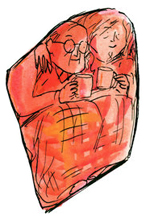
In the following selection from a recent New York Times article (12.01.12), psychology professor Sonya Lyubomirsky (Univ. of CA, Riverside) examines why new, passionate love, a state of intense longing, desire and attraction inevitably morphs, in time, into companionate love, a less impassioned blend of deep affection and connection. She also proposes a powerful antidote to familiarity.