 While complaining may provide us an opportunity to “unload,” and even help us feel connected to one another as we share our grievances, excessive complaining can create an internal cycle of negativity and become a heavy burden to those close to us. By challenging thoughts and feelings that are attached to maladaptive behaviors, we work to transform these habits (such as excessive complaining) into positive actions that serve us better in the long run.
Transcending our Imperfect Bodies (F. Bruni)
 In a most wise and moving opinion piece in the New York Times this past week (These Wretched Vessels, 12.24.12), columnist Frank Bruni urges us reexamine the way we tend to “foolishly define ourselves in terms of what’s measurable from the outside, instead of what glimmers within.”
The following is a selection from his piece, which was inspired by his viewing of the movie “The Sessions.”
Teens & Drugs: What’s a Parent to Do? (Part 2 – M. Rosenbaum)
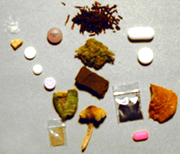 I have introduced Marsha Rosenbaum’s reality-based approach to teen drug use in an earlier posting. In the following selection from the same booklet, Safety First, published by the Drug Policy Alliance under her leadership, Rosenbaum suggests that while there are no easy answers for parents concerned with their teens’ safety and well-being, she can suggest a few guidelines.
Empathy and the Brain
 ScienceDaily published a piece this week (Area of the Brain That Processes Empathy Identified, 10.24.12) about an international team led by researchers at Mount Sinai School of Medicine in New York that has shown, for the first time, that one area of the brain, called the anterior insular cortex, is the activity center of human empathy, whereas other areas of the brain are not.
If You Can Dream… (R. Kipling)
 In 1909 Rudyard Kipling (1865-1939), English short-story writer, poet and novelist (remembered mostly for his tales and poems of British soldiers in India and for his tales for children) published his now-famous poem “If” in a collection entitled Rewards and Fairies. The poem was not well-received, possibly because of its moralizing tone, its too-neat solution to life’s problems, and its orderly, rhymed verses at a time when Romantic poets were experimenting with freer forms of verse.
Defer Gratification: You Won’t be Sorry!
 A persuasive study out of Duke University (2010) suggests that not only is self-control important for the health, wealth, and public safety of the population, but that childhood self-control can predict physical health, substance dependence, personal finances, and criminal offending outcomes, following a gradient of self-control.
Surviving the "Squeeze" (according to Buddhist teaching)
 In her popular book, When Things Fall Apart: Heart Advice for Difficult Times (Shambhala Classics, 2000), renowned American Buddhist nun and spiritual teacher Pema Chödrön (born Deirdre Blomfield-Brown) offers words of wisdom for going on living when we are overcome by pain and difficulties.
The following paragraphs paraphrase a few of her ideas about relaxing into the “groundlessness” we experience during certain painful, awkward, uncomfortable moments.
The Power of Negative Thinking (O. Burkeman)
 In a recent New York Times piece, Oliver Burkeman, author of the forthcoming book The Antidote: Happiness for People Who Can’t Stand Positive Thinking, takes a look at the recent event in San Jose, CA, called Unleash the Power Within, starring motivational speaker Tony Robbins. Twenty-one people, committed to the belief of Mr. Robbins and his acolytes that “it’s all a matter of mind-set: cultivate the belief that success is guaranteed, and anything is possible,” were treated for burns after walking barefoot over hot coals. The following is a selection from Burkeman’s piece.