 The one thing that separates those of us who feel a strong sense of belonging and connection from those of us who don’t is the ability to be authentic, to stop pretending, to accept uncertainty, and to allow ourselves to be deeply seen — with all our imperfections.
This is the conclusion reached by Brene Brown, a research professor at the University of Houston Graduate College of Social Work, who has spent the past ten years studying vulnerability, courage, authenticity, and shame.


 Marital therapists commonly speak of “relationship dances” when exploring the repetitive patterns of interaction that couples fall into, patterns that greatly limit their capacity to problem-solve. Some of the more common “dance steps” include the following:
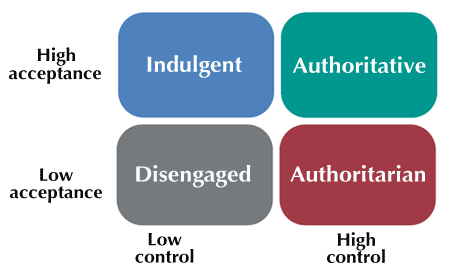
 Baumrind’s initial study and the many studies that have followed have led to the following (broadly described) conclusions about the impact of these different parenting styles.

 While couples frequently complain that their partners aren’t sensitive to their needs, I have observed many dissatisfied individuals presenting as OVER-sensitive to the other’s needs and feelings. Wanting to avoid hurting or “devastating” the other, they avoid confrontation altogether. In the most sensitive of areas – the sexual realm – couples will live together for decades, so enmeshed in one another’s feelings and in their need to maintain emotional stability, that what needs to be said is never said. And so, naturally, nothing changes.